World Bank: Iraq Has Clear Vision for Financial Reform and Revenue Growth
The World Bank said on Monday that the Iraqi government has a clear vision for implementing financial reforms, stressing the importance of the national budget in supporting fiscal policy and strengthening public revenues.
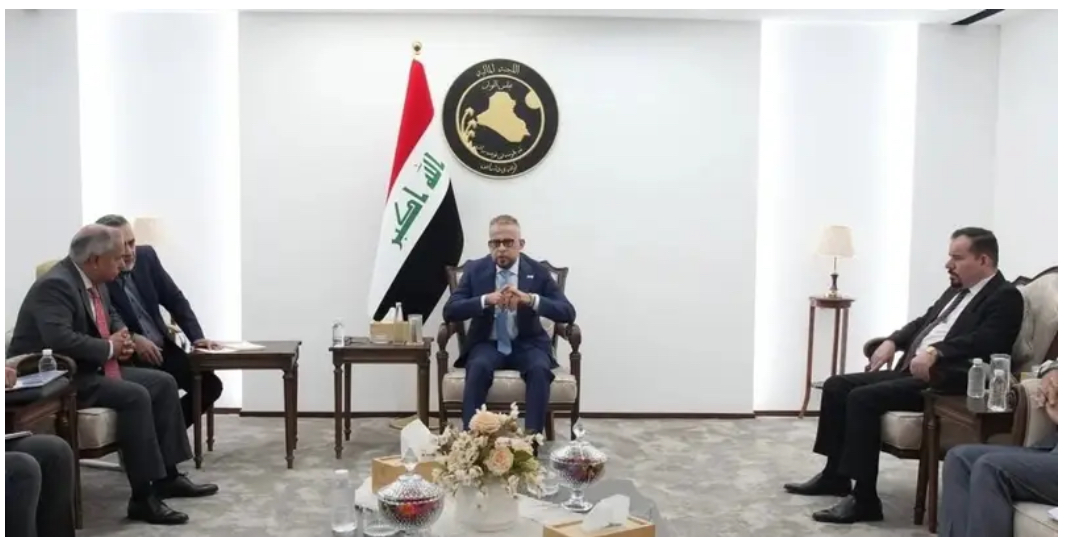
A statement from the Iraqi Parliament’s Media Department said that the Parliamentary Finance Committee, chaired by MP Adi Awad, hosted a World Bank delegation headed by Sandeep Mahajan, Regional Director for Prosperity in the Middle East, North Africa, Afghanistan and Pakistan, to discuss Iraq’s fiscal situation and plans to shift from line-item budgeting to program- and performance-based budgeting.
The meeting also addressed ways to diversify Iraq’s export routes and avoid relying on a single channel, in addition to increasing non-oil revenues and advancing the automation of the tax system.
The Finance Committee praised the World Bank’s support for the Iraqi government and parliamentary institutions, expressing hope that cooperation would continue and contribute to strengthening the country’s fiscal and economic policy framework.
For his part, the World Bank delegation leader said the Iraqi government has a clear direction toward implementing financial reforms. He described the budget as a key instrument for managing fiscal policy, while emphasizing the need to improve public finances, increase government revenues and establish institutions capable of operating modern and efficient financial systems.
The two sides also discussed mechanisms for gradually moving from line-item budgeting to performance-based budgeting, improving data verification, and enhancing the management of spending units and financial allocations.
They further considered introducing the new budgeting approach in stages, initially applying it on a limited basis in selected provinces and institutions, while continuing efforts to expand non-oil revenues.
Both sides expressed readiness to exchange expertise and monitor developments in Iraq’s financial sector, while highlighting the importance of continued support for the Iraqi government and specialized training programs on program- and performance-based budgeting.