Barzani: Efforts to Exclude the KDP Are an Illusion, and Weapons Outside State Control Could Lead Iraq Into the Unknown
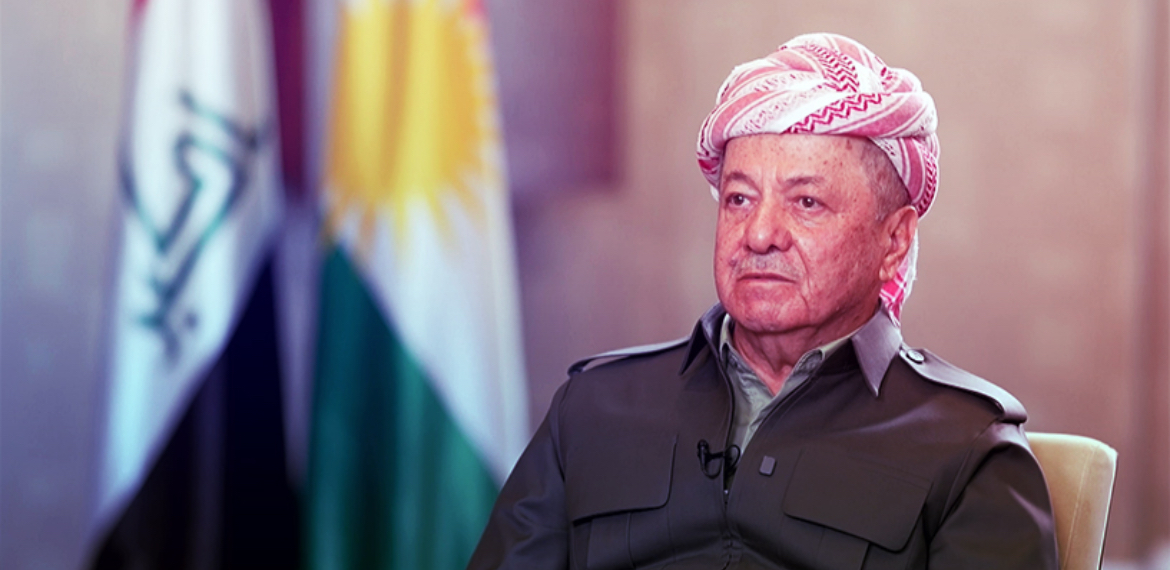
In a rare and candid interview, Kurdistan Democratic Party leader Masoud Barzani appeared on Al Sharqiya TV, where he discussed a range of key Iraqi political issues as well as regional and international challenges. The interview, conducted by journalist Hisham Ali, also addressed Barzani’s vision for relations between Baghdad and Erbil.
Barzani reaffirmed his commitment to the principles of partnership, balance and consensus, stressing the need to build an Iraq in which all communities enjoy equal rights and responsibilities. He criticized the way Iraqi governments are formed, arguing that political agreements and constitutional provisions are often disregarded once governments take office, leaving political and personal preferences to shape decision-making.
He also discussed the disputes surrounding the formation of the current Iraqi government, saying the Kurdistan Democratic Party had been subjected to what he described as a “dirty conspiracy” involving several political parties. Barzani disclosed details of an agreement reportedly signed between Kurdistan Region President Nechirvan Barzani and Badr Organization Secretary-General Hadi al-Amiri, saying that the agreement has yet to be implemented.
Barzani questioned the value of remaining part of a government if Kurdish rights and dignity are not respected. He also addressed attempts to isolate the KDP from Iraq’s political landscape, saying those who believe the party can be excluded are mistaken, stressing that political forces may change while the KDP remains.
On the broader political system, Barzani argued that governing Iraq without the Sadrist movement and the Kurdistan Democratic Party leaves the political process incomplete and, in his words, “paralyzed.” He also held the Coordination Framework responsible for what he described as violations of political agreements and commitments.
Regarding efforts to place all weapons under state control, Barzani said the process would be extremely difficult, whether on September 30 or at a later stage. He pointed to the existence of groups that benefit from maintaining weapons outside state institutions and therefore have little incentive to surrender them.
Barzani warned that the continued presence of weapons outside state authority could expose Iraq to further problems and potentially lead the country into an uncertain future, stressing that all political actors are effectively in the same boat and could ultimately face the consequences together.
He also renewed his warning against a possible repeat of the ISIS scenario following the withdrawal of international coalition forces from Iraq, stressing that the issue should remain outside political disputes and competition.
Barzani further revealed details surrounding the decision by Iraq’s political leaders in 2011 to end the U.S. military presence. He said political bloc leaders had supported ending the American presence at the time, only to return after the events of 2014 and appeal to the United States and other countries for assistance in defeating ISIS.