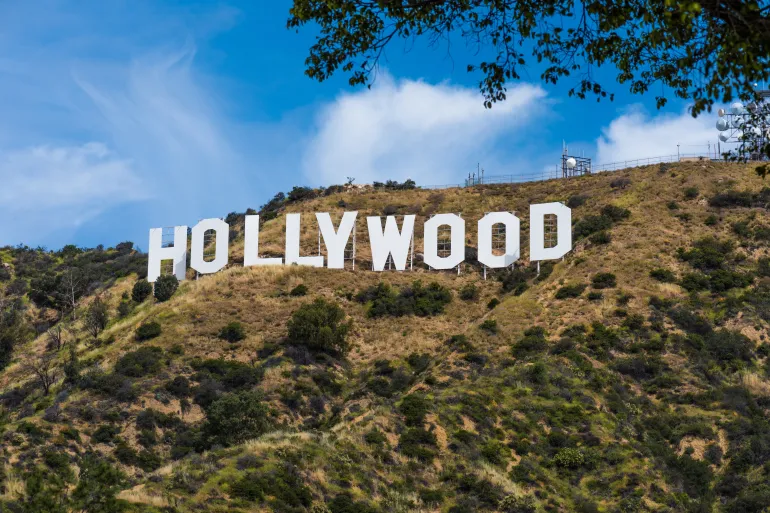
Hollywood's relationship with the United States was once governed by a simple equation: tax incentives in exchange for jobs, spending, and prestige. But this equation changed dramatically by 2026. As conservative-leaning states enacted laws affecting voting rights, environmental regulations, and abortion rights, filming locations became a prime political battleground. Major studios, unions, and prominent creatives began using massive production budgets as a tool for political leverage, disregarding the financial implications.
Calls to boycott conservative states, threats to withdraw productions, and a complete reassessment of film destinations emerged, portrayed as uncompromising moral choices. Some describe this movement as an "economic boycott weapon" in defense of civil rights, while others see it as selective and politically motivated anger that clashes with the reality of multi-billion-dollar incentives.
Between principle and profit, Hollywood now operates in a gray area, where leaving a state can be seen as a stand for resistance, while remaining in one is perceived as tacit complicity. The “Hollywood of the South” Under Siege

Georgia is the prime example of this struggle. Over the past decade, generous tax breaks have transformed Atlanta into the “Hollywood of the South,” making it one of the busiest production hubs in the world.
Academic estimates suggest an annual economic impact exceeding $4 billion, creating a thriving ecosystem of crews, suppliers, and massive infrastructure. But this success has also made Georgia a prime target for political backlash.
In 2019, the Fetal Heartbeat Law, which restricts abortion, sparked immediate reactions. Netflix was among the first to issue warnings, announcing it would reconsider all its investments in the state. Disney followed suit with a well-known statement from its then-CEO, asserting that it would be “practically and morally” difficult to continue operating there.