Baghdad celebrates the centenary of pioneering Arab poets on Al-Mutanabbi Street
Al-Mutanabbi Street in central Baghdad hosted a series of literary discussions, poetry readings and musical performances on Friday as part of the “Centenary of the Pioneers” festival, marking 100 years since the birth of poets Badr Shakir al-Sayyab, Abdul Wahab al-Bayati and Buland al-Haidari. The festival will continue through Saturday.
Friday’s program included a morning critical session dedicated to the poetic experience of Buland al-Haidari, moderated by critic Ali Mutab Jasim. The session featured a number of literary studies and critical readings examining Haidari’s poetry and his role in the development of modern Arab poetry, with the participation of writers, critics and cultural figures.
A second critical session focused on Abdul Wahab al-Bayati and was moderated by critic Saad al-Tamimi. It featured academic studies and readings addressing various aspects of Bayati’s poetic career and literary legacy.
The evening program continued at the Mutasarrifiyah building in Al-Sarai Alley on Al-Mutanabbi Street, where several poets delivered readings alongside a musical performance by artist Ali al-Salam. The day’s events concluded with a poetry evening at the Al-Jawahiri Hall at the headquarters of the General Union of Writers and Authors in Iraq.
Held under the patronage of the Prime Minister and in cooperation with the Ministry of Culture, Tourism and Antiquities and the General Union of Writers and Authors in Iraq, the festival commemorates the literary contributions of the three poets and their role in shaping modern Arabic poetry.
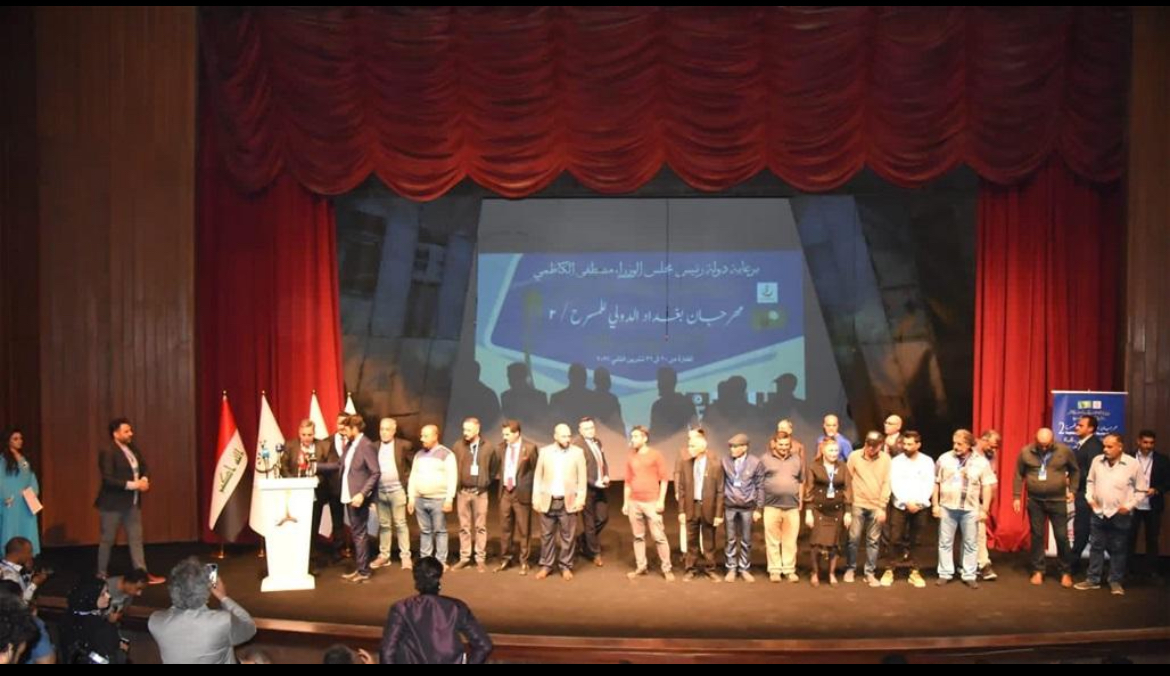
The festival officially opened on Thursday at Al-Rashid Theatre in Baghdad in the presence of senior official and cultural figures. Festival committee chairman Aref al-Saadi highlighted the significance of commemorating the three poets a century after their births.
Al-Sayyab, Al-Bayati and Al-Haidari are widely recognized for their contribution to the renewal of Arabic poetry and their role in moving it beyond traditional poetic forms.